Bread of Angels Summary and Analysis
Bread of Angels by Patti Smith is a deeply personal memoir that blends reflections on art, music, love, loss, and self-discovery. Patti Smith, known for her iconic career as a musician and poet, shares a candid exploration of her journey from a young, struggling artist to a renowned figure in the art world.
The book captures pivotal moments in her life, from her early struggles with poverty and illness, to her rise as a revolutionary figure in the music scene. It is an introspective examination of relationships, the creative process, and the profound effects of grief and healing. Through a raw and reflective lens, Smith opens up about the people and experiences that shaped her art and her identity.
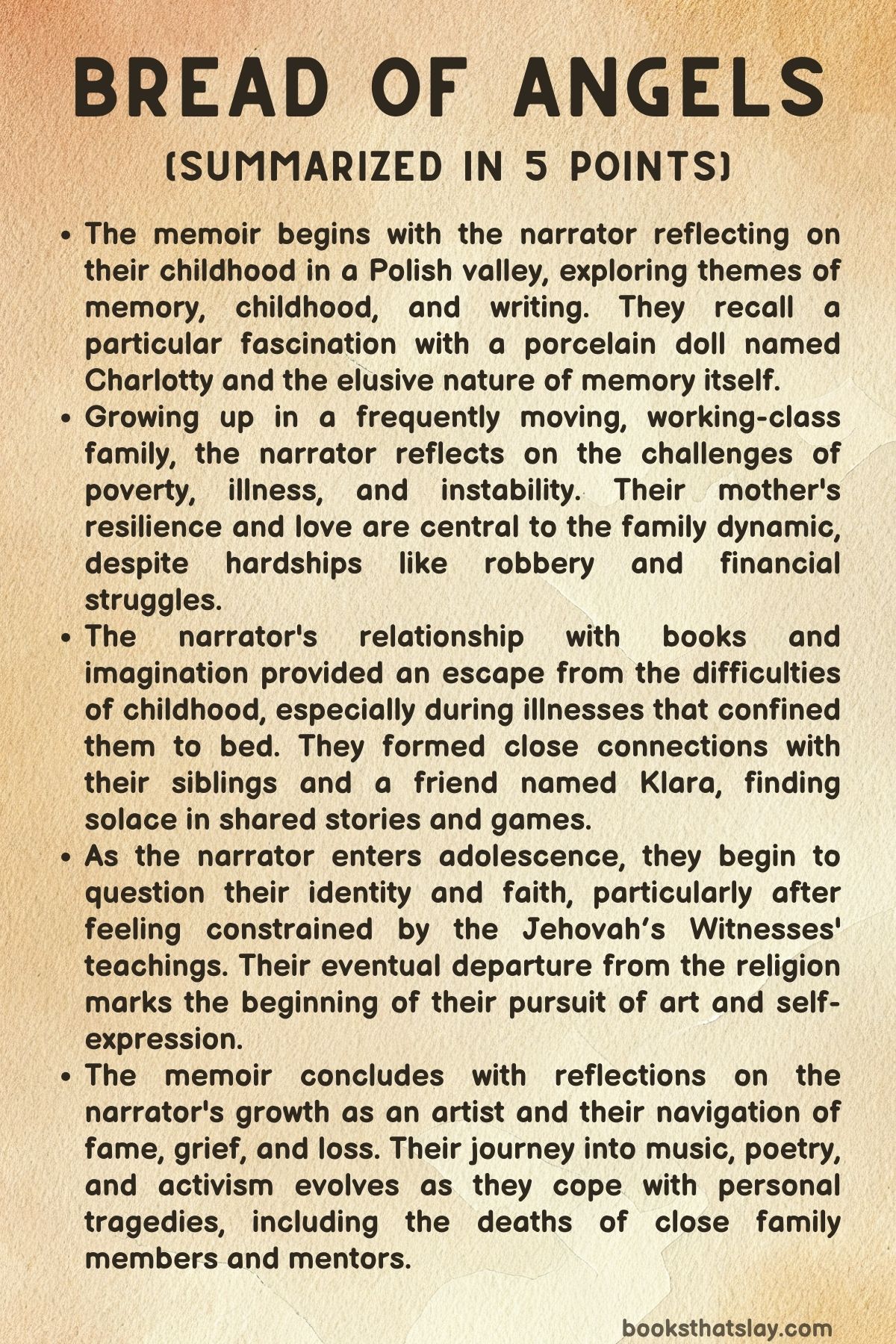
Summary
The memoir starts with the narrator reflecting on their childhood in a Polish valley, where they recall their fascination with objects, particularly a porcelain doll named Charlotty. The narrator’s writing explores the theme of abandoned things and memories tied to childhood, especially those items they never had, such as fine clothes and accessories.
The writing process is depicted as an attempt to capture fleeting moments, much like a memory that resists being forgotten.
The narrator reflects on their earliest memories, including their first steps and the sensation of movement as a child. They grew up in a family where their parents, Grant Harrison Smith and Beverly Williams, met after World War II.
Grant, emotionally scarred from his service, married Beverly, who had lost a child. Together, they moved to Chicago, where the narrator was born.
The family lived in various places, often moving due to financial struggles. The narrator’s father worked at a factory, and their mother worked as a waitress to support the family, especially during difficult times such as a robbery that left them without presents for Christmas.
Despite their hardships, the mother was determined to give her children a better life.
The narrator spent much of their childhood with their siblings, Linda and Todd, creating their own imaginative world through games and stories. Books, particularly poetry, became an important part of their life, offering an escape from the struggles they faced.
During this time, the narrator also battled illnesses like tuberculosis and scarlet fever, which kept them isolated for extended periods. Books and imagination became their refuge during these times.
At the age of six, the family moved again, this time to a temporary residence in a neighborhood filled with other struggling families, including immigrants and veterans. The narrator found solace in their imagination, spending time exploring the area, inventing stories, and playing games.
A bond formed with a girl named Klara, who shared the narrator’s love of books, but Klara’s family soon moved away, leaving the narrator with only memories of their time together.
By the time the narrator was eight, the family’s final move occurred. They relocated to a suburban area, a place that initially felt unfamiliar but eventually provided a sense of stability.
The new home, though it represented security, came with its own challenges. The narrator continued to explore the nearby countryside, particularly Thomas’s Field, which offered moments of solitude and reflection.
The narrator’s relationship with their parents evolved, and they began to understand the sacrifices their mother made for the family.
The narrator’s early life was marked by frequent moves, illness, and the struggles of growing up in poverty. Yet, books, family, and imagination provided comfort and escape.
These formative years shaped the narrator’s future, inspiring their writing and their exploration of deeper meanings in life.
As the narrator grew older, their life took another turn. Their mother, affected by the death of their father, became involved with the Jehovah’s Witnesses, a religion that became central to their life.
However, the narrator eventually found themselves feeling confined by the rigid structure of the faith. The family continued to struggle with poverty, but moments of love and sacrifice remained, such as when the mother spent money meant for groceries on a gift for the narrator during a time of illness.
The narrator was diagnosed with several childhood diseases, and a life-threatening bout with the Asian flu left a lasting impact, particularly on their relationship with music and art. The family also faced challenges with the birth of Kimberly, the narrator’s new sibling, who was born with severe asthma.
The family had to make difficult decisions, including giving up pets to accommodate Kimberly’s health needs. At the same time, the narrator felt the pressures of growing up, especially when their mother insisted they wear more feminine clothes, a request that caused inner turmoil.
In the narrator’s tenth year, they received a bicycle, but a bike accident forced them to confront fear and failure. This lesson was reinforced by their father’s teachings about “keeping your head.” As the narrator entered adolescence, they began questioning their identity, growing uncomfortable with societal expectations of gender roles and their own self-image.
This self-reflection extended to their faith, particularly after an encounter with an elder who dismissed the narrator’s artistic concerns about the post-apocalyptic world. This marked the beginning of their departure from the Jehovah’s Witnesses, and they chose to focus on art and self-expression.
At 19, the narrator faced a personal decision regarding an unplanned pregnancy and chose to give the child up for adoption. This experience was followed by the revelation that their brother Todd was a transvestite, a disclosure that deepened the family’s understanding of each other.
The narrator continued their artistic journey, becoming more involved in music and performance, and eventually formed a close connection with artist and musician Robert Mapplethorpe. Together, they immersed themselves in New York’s artistic circles.
In the early 1970s, the narrator’s debut album “Horses” was released, marking the beginning of their music career. The album received critical acclaim, blending poetry with rock music and cementing the narrator’s role in the burgeoning punk scene.
Their success continued, and they toured extensively, defying societal expectations and challenging norms through their music and art. Throughout this period, the narrator grappled with their identity, particularly in the context of their growing fame.
They met Fred Smith, who would become their partner, and together they navigated the challenges of life and love on the road.
In 1976, the narrator was performing “Horses” to large audiences. Their second album, “Radio Ethiopia,” reflected the narrator’s evolving artistic vision, influenced by global issues and the pursuit of personal and social expression.
This creative journey continued into the late 1970s, though it was marked by the tragic loss of several close friends and mentors to AIDS, including the narrator’s beloved mentor, Robert. These losses shaped the narrator’s grief and their creative output.
By the 1990s, the narrator had experienced both the heights of success and the depths of personal loss. After the death of their partner Fred in 1994, the narrator sought solace in writing, and their reflections on life and loss were poured into their music and writing.
The narrator also became involved in activism, particularly in support of Tibet and against the Iraq War.
Throughout the 2000s, the narrator continued to release music, write, and reflect on their life and the people who shaped it. Their journey of self-discovery continued, as they explored the complexities of family, identity, and loss.
Despite the challenges of life, the narrator found solace in creative expression, and their journey became one of healing, reflection, and personal transformation.
Key People
Patti Smith, the Narrator
The narrator in Bread of Angels is a complex, introspective character who embarks on a deeply personal journey through their childhood, artistic growth, and eventual self-discovery. From an early age, the narrator is marked by curiosity and a fascination with the objects and memories that define their early life.
This inquisitive nature fuels a desire to explore the world beyond their immediate circumstances, an exploration that becomes central to their identity. The narrator’s relationship with their family, particularly their mother and father, plays a pivotal role in shaping their worldview.
Raised in a family struggling with poverty and the emotional scars of past trauma, the narrator experiences a series of upheavals that lead them to find comfort and escape in the world of books, imagination, and art. Their creative journey is marked by a constant search for meaning, influenced by their exposure to various artistic and philosophical movements.
As they grow older, the narrator grapples with their own identity, especially in the context of gender, faith, and societal expectations. The challenges of adolescence, the loss of innocence, and the evolution of their artistic voice are key themes throughout their narrative, and the narrator’s resilience in the face of hardship is a defining characteristic.
Beverly Williams
Beverly Williams, the narrator’s mother, is a strong and determined woman whose life is shaped by immense personal loss and sacrifice. After the death of her first child, Beverly finds solace in her marriage to Grant Harrison Smith, a man emotionally scarred by his experiences in World War II.
Their relationship, born out of mutual pain, anchors the family through difficult times. Beverly’s devotion to her children, especially in the face of poverty and hardship, is evident throughout the story.
She works tirelessly as a waitress, often putting her own needs aside to provide for her family. Despite the financial struggles, Beverly’s efforts to create a better life for her children are unrelenting.
However, her involvement in the Jehovah’s Witnesses and her insistence on conforming to societal gender roles creates tension with the narrator, especially as they begin to question their own identity and the constraints placed upon them. Beverly’s sacrifices, her devotion to her faith, and her unwavering love for her children form the core of her character, even as her actions sometimes drive the narrator away in their quest for personal freedom.
Grant Harrison Smith
Grant Harrison Smith, the narrator’s father, is a figure defined by his emotional scars from World War II. Having returned home broken and traumatized by his experiences, Grant struggles to find peace in civilian life.
His relationship with Beverly, who herself has suffered from the loss of a child, offers some semblance of stability, but Grant’s emotional distance creates a complex dynamic within the family. Despite his struggles, Grant’s love for his children is apparent, though he expresses it in more reserved, sometimes passive ways.
His work at the factory and his role as the family’s provider place him at the center of the narrator’s memories of childhood, particularly in moments of hardship. His teachings about resilience and “keeping your head” during difficult times resonate deeply with the narrator, and these lessons become crucial as they navigate their own struggles later in life.
Grant’s presence, though often overshadowed by the emotional turmoil of his past, is a reminder of the silent strength required to endure life’s challenges.
Linda
Linda, the narrator’s sister, plays an important role in their early childhood, providing both companionship and a sense of shared imagination. Together, they invent their own worlds and find solace in each other’s company, particularly during the difficult times of their childhood.
Linda’s bond with the narrator is marked by an unspoken understanding and a shared sense of being outsiders, having been raised in a constantly shifting, unstable environment. However, as they grow older, Linda becomes more involved in the expectations of society, and the narrator begins to feel the weight of these changes.
Despite the emotional distance that grows between them over time, Linda’s presence in the narrator’s early years is foundational, and her eventual departure from their shared imaginative world marks a shift in the narrator’s own journey toward self-discovery.
Todd
Todd, the narrator’s brother, is a quieter and more introspective character, whose eventual revelation about his identity as a transvestite adds depth to the themes of self-identity and acceptance within the family. Throughout their childhood, Todd is a figure who keeps to himself, and his emotional world is often overshadowed by the more dominant personalities of the narrator and Linda.
However, his eventual disclosure of his true self brings a new level of understanding and openness within the family. Todd’s bravery in embracing his identity serves as an inspiration to the narrator, who is themselves struggling with their own sense of self and purpose.
Todd’s journey is one of self-realization and acceptance, which mirrors the narrator’s own evolution as they navigate the complexities of gender, faith, and identity.
Klara
Klara is a fleeting yet significant character in the narrator’s childhood. A girl who shares the narrator’s love for books, Klara represents a kindred spirit during a time when the narrator’s world was filled with upheaval.
Their friendship is marked by shared moments of imagination and escape, particularly as they both try to make sense of their surroundings in a neighborhood filled with struggling families. However, Klara and her family’s departure from the neighborhood signifies the transient nature of the narrator’s life during this time.
Klara’s role, though brief, leaves an emotional imprint on the narrator, symbolizing the brief but meaningful connections that can shape one’s childhood memories.
Rothschild
Rothschild is a complex figure who embodies the artistic and intellectual circles that the narrator navigates as they enter adulthood. Suffering from polio, Rothschild is confined to a motorized wheelchair, yet he remains a dominant presence in the world of art and literature.
His sharp, angular appearance and his association with literary figures in New York add a layer of intrigue to his character. Rothschild’s involvement in a failed film project and his strained relationship with his wife underscore the complexities of his life and the tensions within his personal and professional worlds.
His interactions with the narrator reflect a broader theme of disillusionment with the art world, as well as the ways in which personal and professional lives can intertwine in unpredictable and sometimes destructive ways.
Robert Mapplethorpe
Robert Mapplethorpe plays a significant role in the narrator’s artistic development, both as a close friend and as a partner in their creative journey. Their relationship is deeply rooted in mutual respect and a shared passion for art and self-expression.
Mapplethorpe’s influence on the narrator is profound, as they both explore the boundaries of art and performance. His artistic vision and the dynamic between them serve as an important catalyst for the narrator’s own creative expression.
Their connection is one of artistic and personal exploration, and Mapplethorpe’s death marks a pivotal moment in the narrator’s life, deeply affecting their sense of identity and purpose. Through their relationship, the narrator learns about the intersection of love, loss, and artistic freedom.
Fred
Fred, the narrator’s partner, is a figure of both personal and professional significance. Their bond is rooted in deep understanding and mutual respect, as they navigate the complexities of life and art together.
Fred’s presence in the narrator’s life represents stability and emotional support, particularly during the tumultuous periods of fame and creative exploration. His eventual illness and death leave a profound impact on the narrator, causing them to confront grief, loss, and the passage of time.
Fred’s influence remains a constant throughout the narrator’s journey, and his passing marks the end of an era in the narrator’s life, yet his memory continues to shape their work and their understanding of love and loss.
Themes
The Complexity of Memory and Childhood
The theme of memory and childhood forms the foundation of the narrative, as the narrator looks back at their early life with a mix of clarity and distortion. Childhood is portrayed not just as a time of innocence, but as a series of experiences deeply tied to loss, change, and yearning.
The narrator reflects on the objects and moments of their early years, such as the porcelain doll Charlotty, which symbolizes the things they longed for but could never fully grasp, like fine clothes and accessories. Memory in this context is not a simple recollection of events but a collection of fragments that refuse to be neatly categorized.
The narrator’s connection to objects and their childhood world reflects an ongoing struggle to reconcile the fleeting nature of youth with the enduring impact of the past. This conflict shapes their writing, which becomes an attempt to preserve the moments that feel both essential and ephemeral.
Childhood is not just about the innocence of play or wonder but about the heavy realities that accompany poverty, illness, and frequent relocations. The narrator’s frequent moves during their early years, marked by a search for stability amidst chaos, highlight how childhood memories are shaped not only by the immediate environment but also by the larger social and economic forces that impact a family’s ability to stay grounded.
Through the lens of childhood, the narrative probes the ways in which memories, even those of joy, are tinged with a sense of loss, showing how these experiences linger and influence the narrator’s journey into adulthood.
The Struggles of Growing Up and Personal Identity
Growing up in a tumultuous and often unstable environment, the narrator’s journey of self-discovery is one marked by internal and external challenges. As the narrative unfolds, the theme of personal identity emerges as the narrator navigates their changing sense of self in relation to their family, their body, and societal expectations.
Early on, the narrator grapples with their gender identity, feeling discomfort when their mother insists on them adhering to traditional feminine roles, symbolized by the insistence on wearing dresses. This imposition of gender norms creates an internal struggle that is compounded by the emotional burden of Kimberly’s illness and the pressures of growing up in a household marked by poverty and sacrifice.
The challenges of adolescence, including fear of failure and confronting the realities of a changing body, underscore the narrator’s deepening sense of alienation. Their identity is also shaped by their rejection of the Jehovah’s Witnesses religion, which they initially embraced but ultimately found constraining as their artistic sensibilities grew.
This rejection of faith marks a key turning point in the narrator’s life, as they begin to pursue a path centered on art, poetry, and self-expression, distancing themselves from the rigid structures of religion and embracing a more fluid sense of self. The narrator’s journey is further complicated by personal relationships, including a difficult decision to give up an unplanned pregnancy and the revelation of their brother Todd’s transvestism, which challenges the family’s understanding of gender and sexuality.
These events deepen the narrator’s exploration of identity, as they come to terms with their own evolving sense of self in a world that continues to challenge their place within it.
The Impact of Art and Creative Expression
Art and creative expression are central to the narrator’s journey, serving as both a means of personal escape and a way to process and make sense of the world. From an early age, the narrator finds solace in books and poetry, which provide a refuge from the physical and emotional isolation brought on by illness and poverty.
This early connection to literature and creativity forms the foundation for a life devoted to art, marking a shift from childhood curiosity to a more serious commitment to expression. The narrator’s involvement with art grows over time, evolving from an appreciation of poetry to an active engagement with music, performance, and visual arts.
Their collaboration with artists like Robert Mapplethorpe and their eventual foray into music highlight the theme of artistic exploration and the ways in which the narrator finds a sense of identity and belonging through creative expression. Art becomes both a refuge and a vehicle for the narrator to confront difficult truths, including personal loss, societal expectations, and the ever-present tension between public identity and private struggles.
Through their music and performance, the narrator challenges societal norms, defies expectations, and carves out a space for themselves within the artistic community. The creation of their debut album “Horses” in 1975 marks a milestone in this artistic journey, representing both a creative rebirth and a personal statement.
Over time, as the narrator continues to navigate the complexities of fame and artistic success, their work increasingly reflects their ongoing exploration of identity, love, loss, and personal transformation. Art, in this narrative, is not just a form of personal expression but a tool for survival, healing, and the negotiation of one’s place in the world.
Love, Loss, and the Passage of Time
The themes of love, loss, and the passage of time form a poignant undercurrent throughout the narrative, reflecting the narrator’s emotional evolution and the inevitable changes that come with it. Love is depicted in its many forms, from the deep connection shared with Robert Mapplethorpe to the enduring bond with Fred Smith, the narrator’s partner.
These relationships provide both comfort and challenge, serving as mirrors through which the narrator comes to understand themselves and their place in the world. However, the theme of loss becomes equally significant, particularly as the narrator experiences the death of close friends, mentors, and family members.
The grief from these losses, particularly the deaths of Robert, Fred, and others, shapes the narrator’s journey and underscores the transient nature of life. The passage of time is marked not only by personal milestones, such as the birth of the narrator’s children or the recording of new music, but also by the inevitable departure of loved ones.
The narrator reflects on these changes with a mixture of sorrow and acceptance, finding solace in the act of writing and creating as a way to honor the memories of those lost. The theme of time is also reflected in the narrator’s ongoing search for meaning, particularly in their later years as they move away from the spotlight of rock stardom to a quieter, more introspective life.
In these moments, the narrator finds comfort in the everyday moments of life, such as family and creative work, which offer a sense of continuity and connection amidst the backdrop of loss. Ultimately, love, loss, and time converge in the narrator’s reflections on their past, present, and future, illustrating how the passage of time reshapes one’s understanding of life and the people who have shaped it.
The Role of Faith and Spirituality
Faith and spirituality are significant themes in the narrator’s journey, explored primarily through their early involvement with the Jehovah’s Witnesses and their later rejection of this faith in favor of artistic expression. As a child, the narrator’s mother, deeply affected by the death of her husband, becomes involved with the Jehovah’s Witnesses, introducing the narrator to the religion.
This experience initially provides the narrator with a sense of structure and belonging. However, as they grow older, the constraints of religious dogma begin to clash with their developing artistic sensibilities.
The narrator’s dissatisfaction with the rigid teachings of the Jehovah’s Witnesses leads to a spiritual crisis, as they begin to question their faith and ultimately reject it in favor of a life dedicated to art. This decision is not made lightly, as it marks a profound shift in the narrator’s worldview.
Faith, once a guiding force in their life, is replaced by a commitment to personal expression and exploration of the world through art, poetry, and music. Despite this shift, the narrator’s journey is still shaped by the spiritual longing for meaning and connection, particularly during times of loss and personal struggle.
This ongoing quest for meaning is expressed not through religious doctrine but through a search for deeper understanding in art and human connection. The narrator’s meeting with the Dalai Lama and his words of forgiveness signify a moment of spiritual healing, offering a sense of closure and reconciliation with their past.
The theme of faith and spirituality is thus intertwined with the narrator’s broader journey of self-discovery and healing, showing how one’s beliefs can evolve and transform over time.